
What Another Season of Ignoring This Actually Costs
Most homeowners think about their garage door in terms of noise, rust, or a spring that might snap. Few think about it as the weakest point of entry into their home. But an attached garage usually connects straight to a kitchen, laundry room, or hallway, often through a door with a flimsy lock or no lock at all. A burglar who gets the garage door open doesn't need to pick a deadbolt or break a window in view of the street. They're inside, out of sight, in under a minute. Put off a few cheap fixes for another season and you're betting your home's security on a door that was built to move, not to resist being forced.
How Burglars Actually Get In
The methods are not exotic. They rely on common weaknesses that exist in a huge share of garage doors, including ones that otherwise look fine.
The Coat Hanger and Zip Tie Trick
Almost every garage door has a red emergency release cord hanging near the opener rail, meant to let you open the door by hand during a power outage. If there's any gap at the top or side of the door, a thin wire or a bent coat hanger can be slid through, hooked around that cord, and pulled to disengage the opener entirely. The door then lifts by hand, no code or key needed. This takes seconds and leaves no visible damage.
Old Fixed-Code Remotes
Openers installed years ago, or openers paired with cheap universal remotes, sometimes still use a fixed code that never changes. These codes can be captured with inexpensive code-grabbing devices and replayed later. If your opener predates rolling-code technology, or you're not sure which kind you have, this is worth checking.
Forcing the Track or Bottom Panel
A door with worn rollers, a bent track, or a bottom panel softened by years of humidity and swelling doesn't sit tightly in its frame. Enough force at the bottom corner can pop it loose from the track just enough to create a gap a person can get a hand or tool into. Doors that already rattle or don't close flush are easier targets.
Doors Left Cracked for Air Flow
In our climate, it's tempting to leave the garage door cracked a few inches to let a hot, humid garage vent out, especially after an afternoon downpour. That gap is an open invitation. It also signals the house may be unattended, which matters during hurricane season when families evacuate or travel for extended stretches.
Exposed Keypads and Shared Codes
Keypad codes that never get changed, especially after lawn crews, contractors, or previous owners had access, are a quiet risk. Salt air and moisture near coastal-adjacent areas can also corrode keypad buttons over time, sometimes wearing the most-used numbers visibly thinner and giving away part of the code.
The Fixes That Actually Work
None of these require a full door replacement. Most are inexpensive and take an afternoon.
- Shield the emergency release. A simple zip-tie trick works both ways: thread a zip tie through the release mechanism's hole so the lever can't be pulled from outside, while still letting you release it by hand from inside in a real power outage. Garage door security shields that cover the mechanism entirely are also widely available.
- Upgrade to a rolling-code opener. If your opener is more than 10-15 years old, it likely lacks rolling-code security. A rolling-code opener generates a new code every time you use the remote, making captured codes useless almost immediately.
- Add a physical slide lock or bar. A manual slide lock on the inside of the door, engaged at night or when you leave town, blocks the door from being lifted even if the opener is disengaged. This matters most during hurricane season travel, when a house may sit empty for days.
- Keep the track and rollers tight. A door that closes flush and tracks smoothly is harder to force. If your door rattles, drags, or doesn't sit evenly, that slack is also a security gap.
- Don't prop it open for ventilation. If garage heat and humidity are the real issue, a vented garage door panel or a small exhaust fan is a safer fix than leaving the door cracked.
- Rotate keypad codes periodically. Especially after any contractor, cleaner, or seasonal worker has had access, and sooner if buttons show visible wear.
- Add motion lighting near the garage. Cheap, effective, and does most of its work just by making the area less appealing to loiter near.
When to Call Bushnell Garage Door Pro
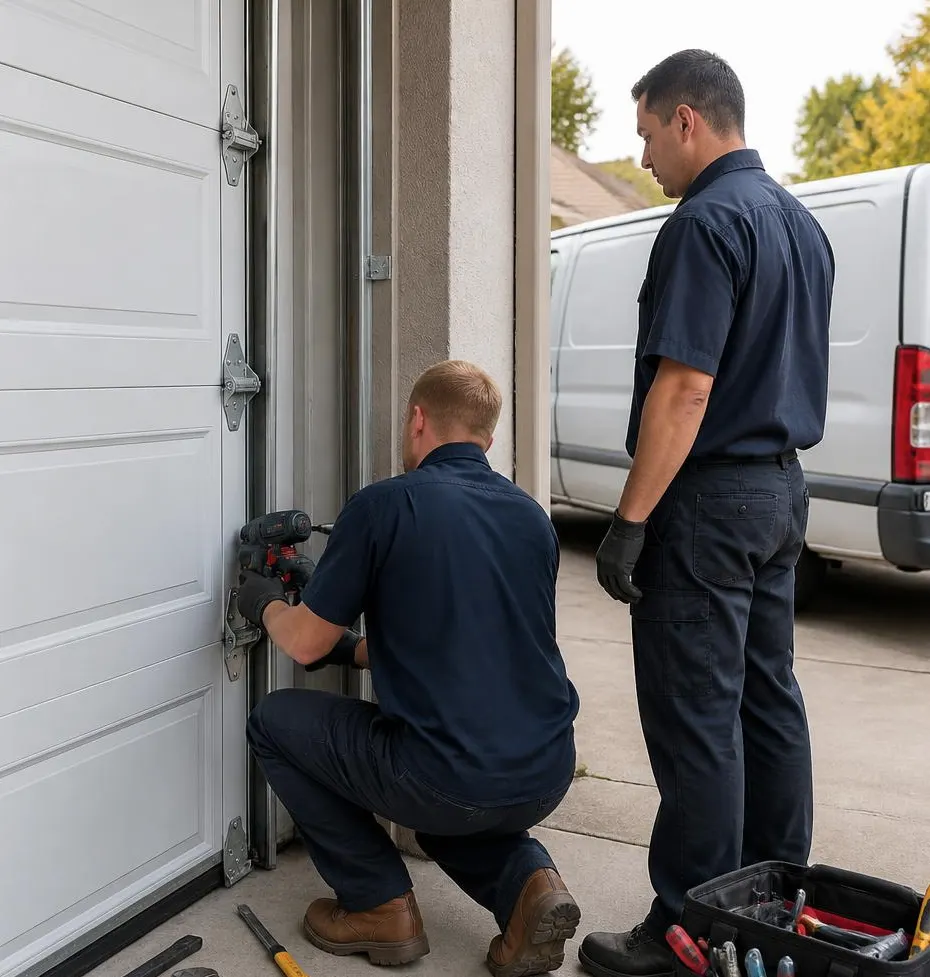
If your opener is older, your door doesn't sit flush in the track, or you're not sure whether your system still runs on a fixed code, it's worth having it looked at before an issue turns into an entry point. Our Garage Door Opener Installation service replaces outdated units with modern rolling-code openers and smart features, and our Garage Door Tune-Up & Maintenance visit checks tracks, rollers, locks, and the emergency release setup for exactly the gaps described above, tightening or repairing whatever's letting the door move more than it should.
If you're in Bushnell, Webster, Wildwood, Coleman, Center Hill, Lake Panasoffkee, Sumterville, or The Villages and want your garage door checked before storm season travel picks up, call Bushnell Garage Door Pro for a straightforward inspection and the fixes that actually make a difference.